Потврда на фондот
Преглед
Сервисот за потврда на средства (PIIS) овозможува на Трети-страни провајдери (TPP) да ја проверат достапноста на средства на сметките на Корисникот на платежна услуга (PSU). За да пристапи до информациите за достапност на средства, TPP мора да создаде согласност за потврда на средства и да ја добие одобрена од PSU. Со одобрената согласност, TPP може да ја провери состојбата на одредена сметка пред да иницира трансфер на средства.
Опис на текот
Подолу е описот на интеграциониот тек во кој TPP создава PIIS согласност и ја проверува достапноста на средства за одредена сметка на PSU. Овој тек претпоставува дека:
- TPP избира експлицитен почеток на авторизацијата со поставување на хедерот
Client-Explicit-Authorisation-Preferred: True; - Банката бара Redirect SCA за иницираната трансакција.
Забелешка: Прикажаниот тек подолу се фокусира на комуникацијата помеѓу TPP и XS2A интерфејсот на платформата за отворено банкарство (OBP), поедноставувајќи ги деталите за комуникацијата помеѓу OBP и банката.
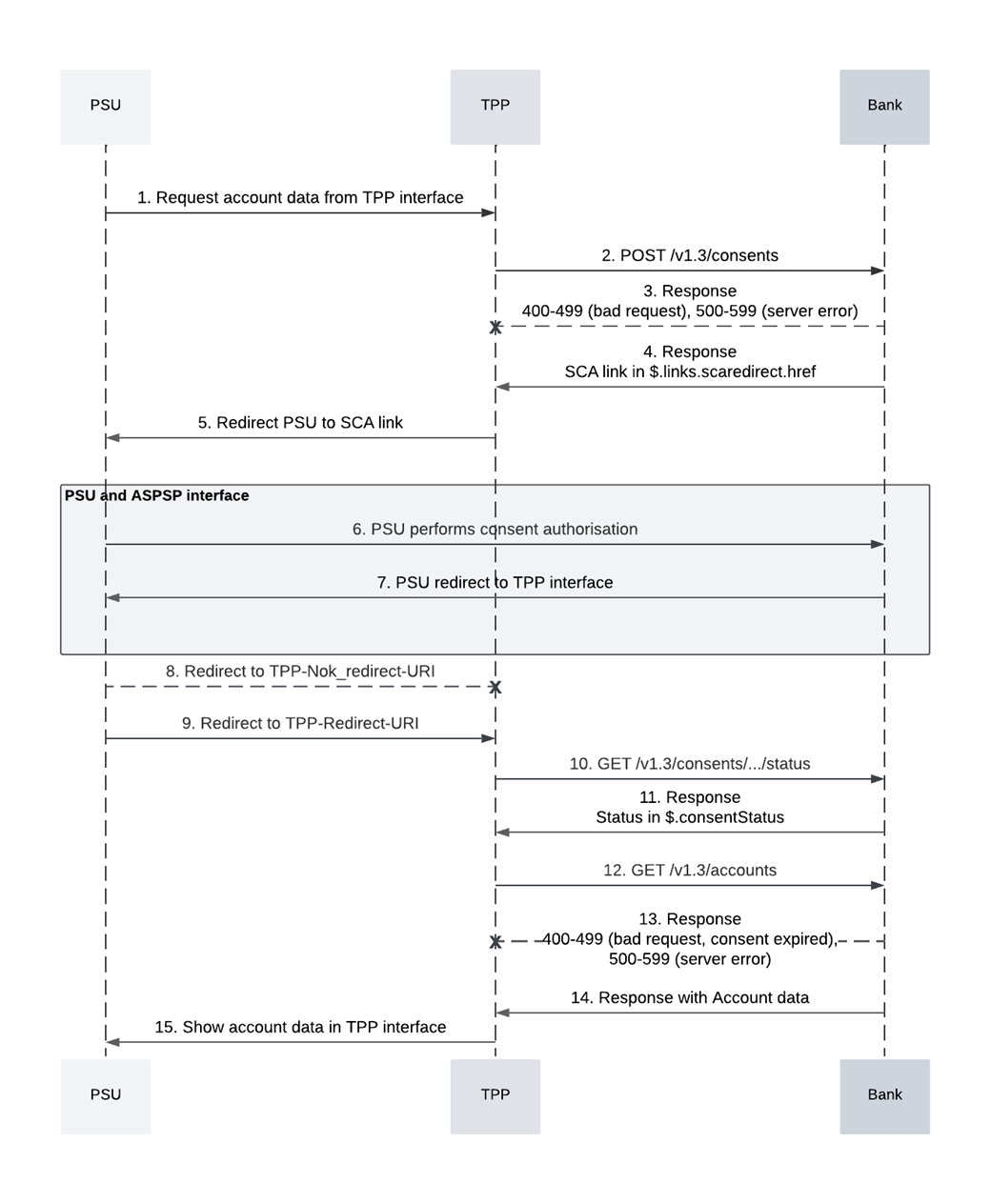
Чекор 1
Корисникот на платните услуги (PSU) го иницира креирањето на согласност преку интерфејсот на TPP.
Чекор 2
TPP повикува
POST /consents/funds-confirmations за да креира AIS согласност:curl -X POST "https://api.ob.kibs.mk/piis/v2/consents/funds-confirmations" -H "X-Request-Id: dc7b16a5-4ac8-4fdc-9c4e-9f9d0387dc07" -H "Content-Type: application/json" -H "PSU-ID: 446456475755" -H "PSU-IP-Address: 123.321.123.321" -H "Client-Explicit-Authorisation-Preferred: True" -H 'Authorization: Bearer eyJhbGciOiJSUzI1NiIsInR5cCIgOiAiSldUIiwia2lkIiA.......' -d '{ "access": { "payments": [ { "account": { "iban": "XX80BANK0000435195001" }, "rights": [ "fundsConfirmations" ] } ] }, "consentType": "detailed", "recurringIndicator": true, "validTo": "2025-12-30", "frequencyPerDay": "4" }'
Чекор 3
OBP враќа уникатен идентификатор на согласност:
{
  "consentId": "e521cf62-a45f-49c5-8372-94853fffeb55",
  "consentStatus": "received",
  "_links": {
    "startAuthorisation": {
      "href": "/piis/v2/consents/funds-confirmations/e521cf62-a45f-49c5-8372-94853fffeb55/authorisations"
    }
  }
}
Чекор 4
TPP повикува
POST /consents/funds-confirmations/{consent-id}/authorisations (со Client-Redirect-URI и Client-Redirect-Nok-URI хедери) за експлицитно започнување на авторизацијата (SCA).Чекор 5
OBP ја враќа SCA Redirect URL (
$.links.scaRedirect.href) за PSU да изврши силна клиентска автентикација (SCA):{ "scaStatus": "received", "authorisationId": "d3f9c3f2-7a8f-4c7f-9b7e-b02e6fdc9420", "_links": { "self": { "href": "/piis/v2/consents/funds-confirmations/e521cf62-a45f-49c5-8372-94853fffeb55/authorisations/d3f9c3f2-7a8f-4c7f-9b7e-b02e6fdc9420" }, "scaRedirect": { "href": "https://bankscaserver.com/auth/d3f9c3f2-7a8f-4c7f-9b7e-b02e6fdc9420" } } }
Чекор 6
TPP го пренасочува PSU кон SCA Redirect URL на банката. Ова е веб-страница на банката каде PSU треба да се автентицира и да ја одобри трансакцијата.
Чекор 7
PSU ја завршува авторизацијата во интерфејсот на банката (веб или мобилен).
Чекорs 8-9
Банката го пренасочува PSU назад кон TPP користејќи го
Client-Redirect-URI кој го обезбедил TPP.Чекор 10
TPP продолжува да го проверува статусот на согласноста сè додека не добие REJECTED или VALID (
GET /consents/funds-confirmations/{consent-id}/status).Чекор 11
OBP одговара со статус на согласност (
$.consentStatus):{ "consentStatus": "valid" }
Чекор 12
TPP го информира PSU за резултатот од авторизацијата на согласноста.
Чекор 13
PSU го иницира плаќањето.
Чекор 14
Пред иницирање на плаќањето, TPP одлучува да ја провери достапноста на средства на сметката на должникот и го повикува
POST /funds-confirmations со Consent-ID хедер:{ "account": { "iban": "XX80BANK0000435195001", "currency": "MKD" }, "payee": "customer name", "instructedAmount": { "currency": "MKD", "amount": "12.32" } }
Чекор 15-17
OBP проверува дали согласноста сè уште е валидна и ги побарува податоците од Банката.
Чекор 18
OBP го враќа резултатот од проверката на достапност на средства:
{
  "fundsAvailable": true
}
Чекор 19
TPP продолжува со иницирање на плаќањето.
PPIS-специфични кодови на грешки
| Сценарио | Грешка |
|---|---|
| Согласноста што се обидувате да ја користите за пристап до информациите за сметката повеќе не е валидна. | 401 – CONSENT_INVALID |
Ја надминувате дневната граница од 4 GET барања без присуство на PSU (т.е. барања без PSU-IP-Address хедер) | 429 – ACCESS_EXCEEDED |